
In 2021, the Ontario government released the Blue Box Regulation that shifts the financial and operational responsibility of recycling programs to producers – those that produce and supply blue box materials to residents. In this new extended producer responsibility framework, producers become financially and operationally responsible for collecting and recycling blue box materials.
Recycling
Curbside Collection for Recycling has Changed
Per the Government of Ontario, the Blue Box Program will be transitioning from municipal governments to a province-wide system. This initiative requires producers (suppliers of Blue Box material comprised of paper, glass, metal or plastic to consumers in Ontario) to be fully accountable and financially responsible for collecting their materials from residents once discarded.
This transition is managed by Circular Materials – the administrator of the common collection system and a not-for-profit organization committed to building efficient and effective recycling systems in Ontario.
As a result, there has been some changes for residents – you are now able to recycle additional materials, but your collection day does not change!
Learn more: www.circularmaterials.ca/ON.
What is Circular Materials?
A national not-for-profit producer responsibility organization that represents the evolution to a more circular economy where materials are collected, recycled and returned to producers for use as recycled content in new products and packaging.
CMO Blind River
REDUCE, REUSE, RECYCLE
Canadians produce a total of more than 31 million tonnes of household waste each year. Make responsible choices. Don't trash it until you've tried to reduce, reuse or recycle it.
Ontario’s transition to producer responsibility
Circular Materials is a national not-for-profit organization that builds efficient and effective recycling systems where materials are collected, recycled and returned to producers to use as recycled content in new packaging and paper. As the administrator of Ontario’s common collection system, Circular Materials is responsible for operating the new system for blue box materials. We are committed to increasing recycling rates across Ontario and ensuring more materials are looped into the circular economy, benefiting both people and the environment.
What does this transition mean for residents?
Transition to the new framework is occurring in a phased approach over two and a half years. During this time, Ontarians will not notice any differences to their recycling schedule and will still be able to recycle the same materials as before. Residents with recycling questions can contact their community’s contractor. In Blind River, this is Green For Life (GFL) Environmental. Community-specific recycling information can be found at circularmaterials.ca/ON.
Transition to extended producer responsibility began in Blind River on January 1, 2025, with the new framework now fully in place as of January 1, 2026. Along with the Regulation, the government released a schedule that assigns each of the 376 Ontario communities a transition date.

Why the transition is important?
- Historically, Ontario’s blue box programs were operated by municipalities who shared the costs with producers. Now, under the Blue Box Regulation, Ontario is transitioning to a new model where producers are fully responsible for operating and funding the entire blue box program.
- In 2026 and onward, Ontario can expect a convenient, consistent, and effective recycling system in place that will improve recycling rates. This includes a consistent list of recyclable materials across the province.
- This new system operated by Circular Materials represents the evolution from product stewardship to a more circular economy where materials are collected, recycled and used again as recycled content in new packaging and products.
What does extended producer responsibility (EPR) mean to residents?
EPR is a framework in which producers – the businesses that supply paper and packaging to residents – are responsible for managing the end-of-life management of these materials. EPR enables innovation, operational efficiencies, increased standard levels, and access to materials. It is recognized as one of the most effective mechanisms to improve recycling rates. This will result in the collection of new streams of recyclable materials in the Town of Blind River and eliminate the cost to the municipality to administer this program.
How does extended producer responsibility (EPR) benefit Ontario?
EPR is a framework in which producers – the businesses that supply paper and packaging to residents – are responsible for managing the end-of-life management of these materials. EPR enables innovation, operational efficiencies, increased standard levels, and access to materials. It is recognized as one of the most effective mechanisms to improve recycling rates. This has resulted in the collection of new streams of recyclable materials in the Town of Blind River and eliminate the cost to the municipality to administer this program.
How does extended producer responsibility (EPR) benefit Ontario?

Community-specific recycling information can also be found by clicking here: circularmaterials.ca/blindriver
Click here to visit Circular Material's homepage.
Canadians produce a total of more than 31 million tonnes of household waste each year. Make responsible choices. Don't trash it until you've tried to reduce, reuse or recycle it.
BATTERY RECYCLING
The Corporation of the Town of Blind is part of a provincial team of thousands of retailers across Ontario helping people recycle used household batteries, free of charge.
Anyone living in the community can recycle household batteries for free at The Blind River Landfill during normal operating hours at 1182 Hwy 17.
Follow the links below for information on recycling your old batteries:
Battery Handling and storage tips
Items Acceptable for Recycling
Pickup schedule
Recycling pick up is every Thursday. Each week we alternate between cardboard and paper pickup and plastic and metal pickup.
Please remember to ensure your materials are curbside by 6am every Thursday for collection. If items are not curbside by 6am, there is no guarantee they will be collected. Routing changes that could affect collection times can often occur for a number of reasons including weather, road closures and vehicle breakdowns.
Non-Recyclable items can contaminate the whole truck and divert it to the landfill
Blind River 2026 pickup schedule
| Type of recycling items | Pickup dates |
|---|---|
Paper and cardboard(fibre)
|
|
|
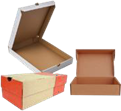
Cardboard Boxes
|
 |
|
Paper laminate packaging Pet food bags, food service paper bags , plates
|
 |
|
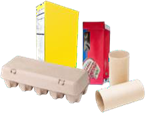
Boxboard Cereal boxes, tissue boxes, egg cartons, rolls from toilet paper and paper towel
|
 |
|
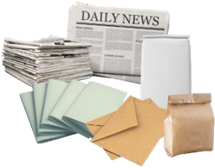
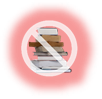
Paper Any color, including flour bags, prescription bags, paper produce bags, notepads, white or colored loose paper, file folders, other printed materials. Community newspapers, flyers, brochures and magazines, greeting cards and envelops, gift boxes
X - Do not include soft or hard cover books/novels |
 |
|
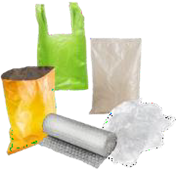
Flexible plastic packaging Bags used for dry cleaning, bread, newspapers and flyers. Overwrap(paper towel & toilet paper, beverage containers). Coffee bags or deli pouches, chip bags, bubble wrap, snack wrappers, cereal liner bags, plastic gift bags.
|
 |
Containers
|
|
|
Glass containers Clear and colored glass. Food containers, jars and bottles. Cosmetic containers, spice bottles, oil and vinegar bottles.
|
 |
|
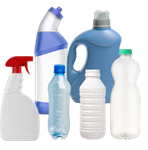
Plastic Containers Laundry detergent and household cleaner jugs, shampoo, body wash, salad dressing, condiment, dish soap, mouth wash bottles.
|
 |
|
Plastic food containers Food trays, salad, yogurt, peanut butter, bakery and egg containers, plastic cups, plastic tubs and lids, black plastic containers.
|
 |
|
Paper laminate containers Spiral cans, cookie dough packages, ice cream containers/tubs, and hot and cold beverage cups
|
 |
|
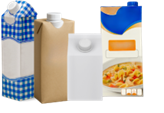
Cartons Dairy and dairy substitute cartons, molasses and sugar cartons, laundry and cleaning cartons, soup and sauce cartons, coffee cartons
|
 |
|
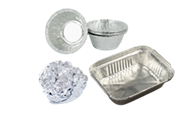
Aluminum (foil trays) Aluminum foil, pie plates, frozen food trays
|
 |
|
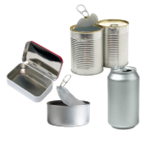
Metal Food cans, metal lids, candle, cookie, coffee and tea tins
|
 |
|
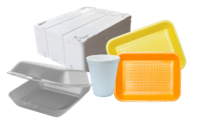
Foam packaging Meat trays, takeout containers, cups, plates, bowls, foam packaging for products
|
 |
|
Tubes Toothpaste tubes, deodorant, hand cream tubes
|
 |
|
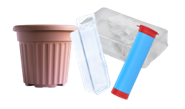
Small plastic containers Small item packaging, hand sanitizer bottles, plant pots
|
 |
|
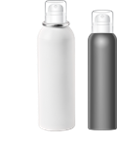
Aerosol containers Food spray, hairspray, air fresheners, shaving cream, deodorant
Aerosols with toxic, corrosive or flammable symbols are not accepted with the exception of:
|
 |
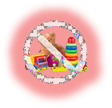
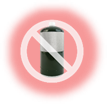
The following items are not accepted for Curbside Recycling Collection
|
|



General Disposal Tips
· Give containers a quick rinse before putting in your recycling.
· Place materials clean, dry and loose in your recycling.
· Flatten and bundle cardboard to save space.
· Lids and labels can remain ON containers.
· Have your recycling to the curb by 6 a.m. on collection day.
· Hazardous materials, like batteries and medical sharps, do not belong in your recycling. Safely recycle them at a designated drop off location.
Recyclable items


When it comes to recycling, awareness is key. Contamination is the biggest issue impacting successful recycling practices today, when people throw in items they shouldn’t, such as grease-soaked cardboard, plastic bags or paint cans. This is why it’s important to know what you can recycle and what you can’t.
WHERE TO PLACE ITEMS FOR COLLECTION:
- In a visible location on the ground as close as possible to the roadway (not behind shrubs, fences or snow banks)
- On level ground
Do not:
- Place items on top of snow banks. Instead, shovel an area that is flat and place your items there to prevent items from falling, slipping or tipping over.
- Place items on the sidewalk or travelled roadway. This area must be kept clear for road or sidewalk maintenance crews. This is especially important during winter months.
Purchase a Blue Box
Blue boxes are no longer available at our municipal office at 11 Hudson St. Please contact GFL for all blue box sale inquiries.
Waste Recycling Strategy
View our Waste Recycling Strategy to learn how we are improving the efficiency of our recycling program and diverting waste away from our landfill.
Who to Contact
GFL is the administrator of the curbside recycling program in Blind River. If you have any questions or concerns related to the collection of curbside recycling please direct them to GFL at 1-833-779-4352
For concerns or other recycling related questions, please contact Circular Materials at customerservice@circularmaterials.ca or 1-877-667-2626
Sign up to our Newsletter
Stay up to date on the city's activities, events, programs and operations by subscribing to our eNewsletters.